
Value of treating hearing loss to reduce cognitive decline – ASHA – American Speech Language Hearing Association
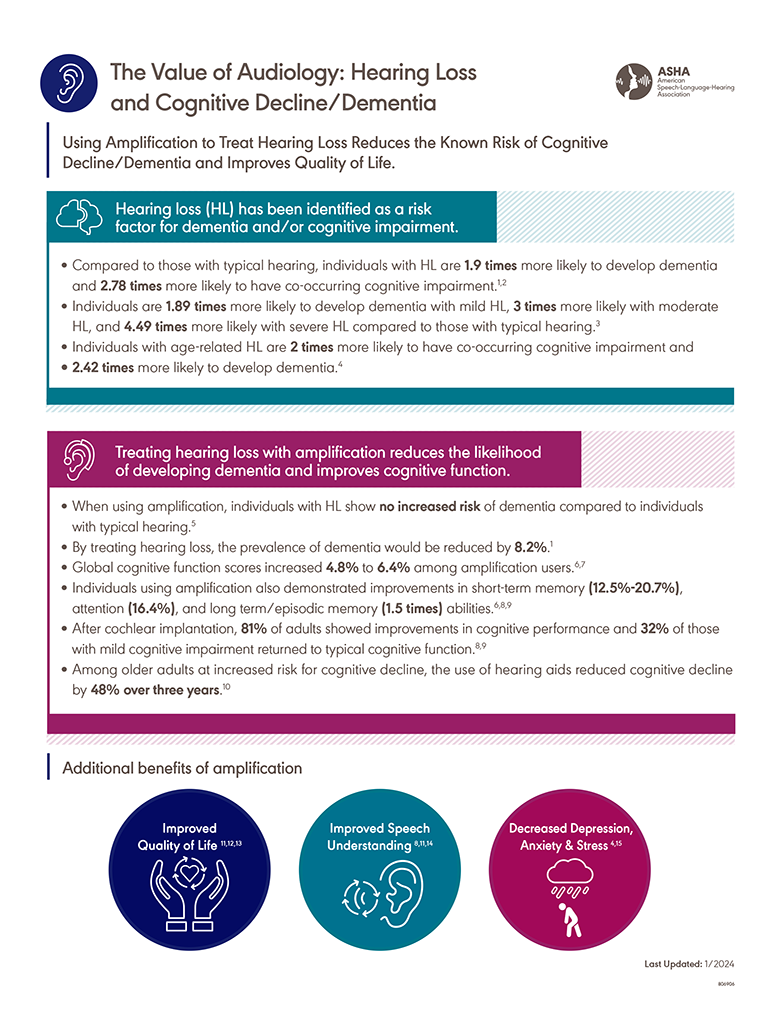
Explore evidence on the relationship between hearing care and cognitive health, including how identifying and managing hearing loss may help support cognitive function and quality of life.
Stages of hearing loss – NCOA – National Council on Aging
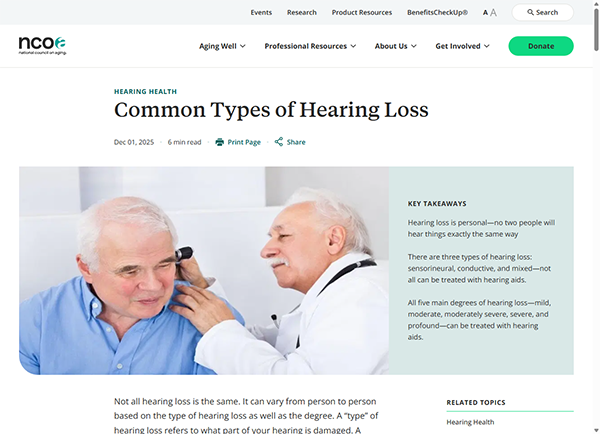
An introduction to the different types and degrees of hearing loss. Hearing loss varies between individuals, and no two people experience it in the same way. There are three types of hearing loss: sensorineural, conductive, and mixed—not all can be treated with hearing aids. Hearing loss ranges from mild to profound. While hearing aids may […]
Global impact of cognitive decline – WHO – World Health Organization

Cognitive decline is a collective term for conditions that affect memory, thinking, and the ability to perform everyday activities. Symptoms typically progress over time. While cognitive decline mainly affects older adults, it is not a normal part of aging. In 2021, an estimated 57 million people worldwide were living with cognitive decline, with nearly 10 […]
Global impact of hearing loss and deafness – WHO – World Health Organization
More than 5% of the world’s population, or around 430 million people, require rehabilitation to address disabling hearing loss, including 34 million children. By 2050, this number is projected to exceed 700 million people, or one in every ten globally. This website from the World Health Organization provides an overview of hearing loss and its […]
Impact of hearing loss on work – HHF – Hearing Health Foundation
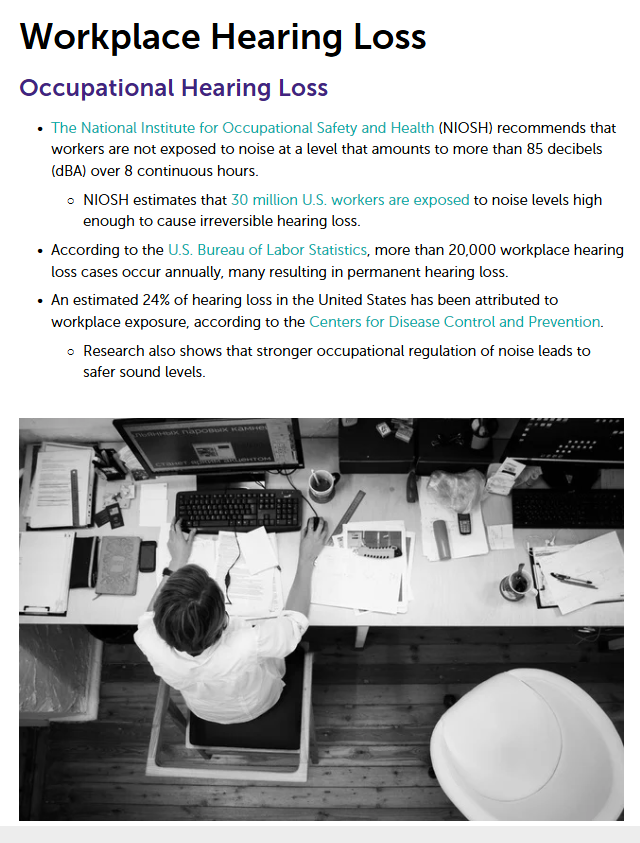
Summary of the prevalence and impact of workplace-related hearing loss from the Hearing Health Foundation (HHF). HHF is a nonprofit organization that funds research into hearing and balance disorders in the United States. It supports scientists working to prevent, treat, and better understand hearing loss, tinnitus, and other hearing and balance conditions.
Impact of hearing loss on mental wellbeing

Hearing loss can affect mental wellbeing by limiting communication and social connection. Clinicians often report associations with frustration, isolation, and reduced quality of life.
Link between diabetes and hearing loss – CDC – US Center for Disease Control
Diabetes can lead to nerve damage that affects multiple parts of the body, including the auditory system. What to know Over time, poorly controlled blood glucose levels may damage nerves involved in hearing. Effective blood glucose management may help reduce the risk of hearing-related complications. Awareness of the signs of hearing loss and preventive strategies […]
Link between heart disease and hearing loss – AHA – American Heart Association
Emerging evidence suggests an association between sensory loss, including hearing and vision loss, and cardiovascular health outcomes. Studies indicate that middle-aged and older adults with hearing or vision difficulties may have a higher risk of stroke or heart disease compared with those without sensory impairment. These findings highlight the potential value of screening for sensory […]
Statistics and facts on hearing loss – HLAA – Hearing loss Association of America
Key facts and statistics from the Hearing Loss Association of America (HLAA). HLAA is the leading voice for millions of Americans with, and at risk of, hearing loss. This site provides data and education information on: Prevalence of hearing loss in the United States Populations at higher risk and potential impacts on employment Overview of […]
Knowing your vital sign for hearing – JHU – Johns Hopkins Bloomberg School of Public Health

The Hearing Number is a simple way for patients to understand and monitor their hearing over time. Clinically, the Hearing Number refers to the four-frequency pure tone average (PTA4), which underpins the World Health Organization’s classification system for hearing loss. Additional information and downloadable resources are available here