Referring
a patient

Support patients with hearing loss in receiving appropriate and timely care.

A female doctor speaking with a middle-aged woman.

Overview

When determining how best to manage hearing loss, it’s important to ensure that the selected approach is likely to provide meaningful benefit for the patient.

Even mild hearing loss can affect listening and communication. Referral for further audiological assessment is appropriate when screening suggests a possible loss or when a patient or family member expresses concern.

Dr Grace and Ryan Casserly
Hear from Drs. Grace and Ryan Casserly, Montage Health on the importance of assessing your patient’s hearing.

Referring for audiological testing

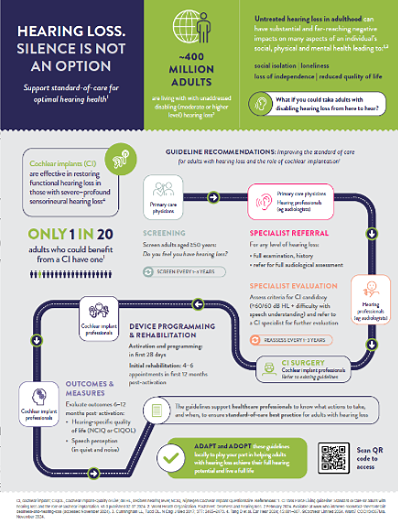
An increasing body of clinical evidence shows that inadequate management of severe to profound hearing loss may limit improvements in hearing function and reduce the potential benefits of overall health.

It’s important to refer patients that don’t hear well, even when they are using hearing aids or other hearing solutions for specialist evaluation. Inadequate aiding of a hearing loss results in poor hearing outcomes and puts patients at risk for impacts on their overall health.

When to refer for a hearing aid evaluation​

  • Mild to moderately-severe hearing loss in one or both ears
  • Difficulty with speech understanding
  • Patient or family reports hearing difficulties
hearing-implant

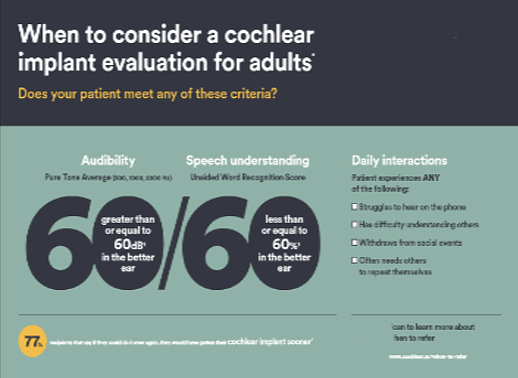
When to refer for a cochlear implant evaluation

  • Severe to profound hearing loss in both ears or severe to profound loss in one ear
  • Difficulty understanding speech in noise even with hearing aids
  • Patient or family reports limited benefit from a hearing aid(s) or dissatisfaction

Note:

Sudden or single sided hearing loss should be evaluated promptly by an otolaryngologist

What to know about cochlear implant referral

Cochlear implant
Cochlear Implant

Cochlear implants are an evidence-based option for individuals with severe to profound hearing loss, when hearing aids no longer provide sufficient benefit, particularly for speech understanding in complex listening environments. Initiating a conversation and referring a patient for evaluation can support timely access to further assessment and informed decision-making.

  • Timely CI referral helps providers and patients determine if a cochlear implant is the right solution at this time. If not, the evaluation will serve as a baseline for ongoing monitoring.
  • There is no upper age limit for cochlear implants with evaluation and care coordinated by a multidisciplinary team.
  • The surgical procedure is typically performed on an outpatient basis and generally lasts 1.5 hours.
  • Many patients resume usual activities within one week.
  • Patient satisfaction rates are reported at 95%2

Referring for a cochlear implant evaluation

Patients with severe to profound hearing loss should be referred to a cochlear implant clinic for a comprehensive evaluation by qualified specialists.

This evaluation establishes a baseline for ongoing monitoring and helps determine appropriate management options. Patients should understand that the initial evaluation is an information-gathering appointment intended to explore possible next steps.

During the evaluation, patients can ask questions and receive guidance on whether a cochlear implant may be an appropriate option for them. Participation in the evaluation does not commit the patient to proceeding with implantation, even if candidacy criteria are met.

Richard Gurgel
Richard K. Gurgel, MD MSCI, Professor of Otolaryngology, University of Utah
Referral support tool

Referral support tool

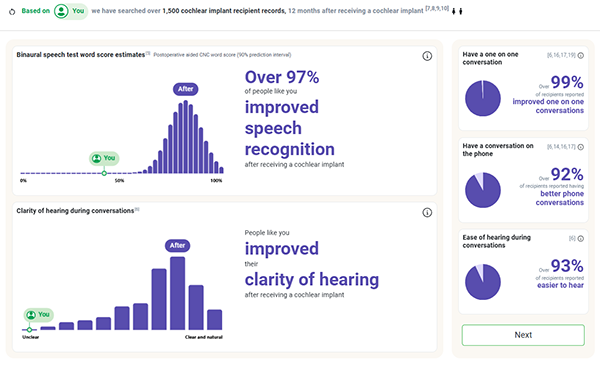
This tool uses patient hearing data and structured questions to support cochlear implant referral conversations, drawing on clinical evidence to generate illustrative ranges of expected hearing outcomes.

Individual results will vary, and the outputs are not a substitute for a comprehensive clinical evaluation. However, they may assist hearing healthcare professionals in facilitating informed discussions.

Links to useful websites

ACA website image
American Academy of Audiology - Practice guidelines and standards

These guidelines promote optimal health-care policies and standards and guide clinical decision-making for providing evidence-based care for individuals with hearing and balance disorders.
View guidelines on the AAA website >

ASHA website
American Speech Language Hearing Association – Hearing aids for Adults

This site provides guidance on hearing aids for adult populations aged 18 years and older.
View website >

Patient FAQs on cochlear implants

Why would a cochlear implant work when a hearing aid does not?

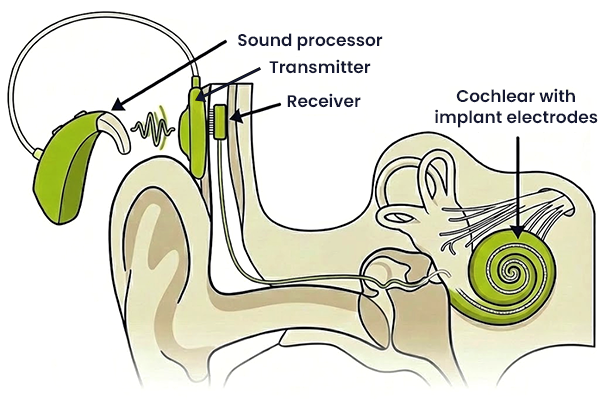
Hearing aids amplify sound, sending a louder signal to an ear that still has damage in the inner ear. When hearing loss is severe, even amplified sounds can’t be processed clearly enough by the inner ear to enable understanding of speech.

A cochlear implant bypasses the damaged parts of the inner ear and sends sound signals directly to the hearing nerve, allowing for clearer hearing and improved understanding.

A study found that in adults with significant hearing loss, the number of participants reporting overall satisfaction with their hearing performance increased substantially after cochlear implantation, from 9% when using hearing aids alone to 95% after receiving a cochlear implant.2

No: In cochlear implant surgery a small implant is placed just beneath the skin behind your ear during a routine outpatient procedure.

The surgery typically lasts about 90 minutes and is performed under general anesthesia.

Most patients describe minimal discomfort after surgery and return home the same day.

Just like a hearing aid you can remove the external sound processor, but keep in mind that people achieve the best results when they use their cochlear implant all day, every day

Many cochlear implant systems are waterproof or water-resistant, so they can be worn while swimming, showering, or exercising – depending on the model and accessories.

It’s recommended to charge your implant system while you sleep so it’s ready to use each morning.

Hearing your friends and family in noisy situations is especially difficult for those with severe to profound hearing loss. With a cochlear implant you do not have to miss out on those important conversations. In fact, adult cochlear implant users demonstrated a significant improvement in hearing in noise when compared to their hearing aid performance.3

Studies have shown that people with cochlear implants:

  • See improvements in speech understanding, sound clarity and language skills3,4,5,6
  • May see an improvement in quality of life7,8
References: 
  1. Zwolan TA, Schvartz-Leyzac KC, Pleasant T. Development of a 60/60 guideline for referring adults for a traditional cochlear implant candidacy evaluation. Otology & Neurotology. 2020 Aug 1;41(7):895-900.
  2. Lupo JE, Biever A, Kelsall DC. Comprehensive hearing aid assessment in adults with bilateral severe-profound sensorineural hearing loss who present for Cochlear implant evaluation. American journal of otolaryngology. 2020 Mar 1;41(2):102300.
  3. Buchman, C. A., Herzog, J. A., McJunkin, J. L., Wick, C. C., Durakovic, N., Firszt, J. B., & Kallogjeri, D. (2020). Assessment of Speech Understanding After Cochlear Implantation in Adult Hearing Aid Users: A Nonrandomized Controlled Trial. JAMA Otolaryngol Head Neck Surg, 146(10).
  4. Leigh, J., Dettman, S., Dowell, R., & Briggs, R. (2013). Communication development in children who receive a cochlear implant by 12 months of age. Otol Neurotol, 34(3), 443–450.
  5. Shapiro, S. B., Mowery, T. M., & Wackym, P. A. (2025). Speech, Spatial, and Qualities of Hearing Scale and Tinnitus Functional Index Improvements After Cochlear Implant Surgery for Single-Sided Deafness. Laryngoscope Investig Otolaryngol, 10(2), e70090.
  6. Yoshida, T., Kobayashi, M., Hara, D., Taniguchi, R., Fukunaga, Y., & Sone, M. (2025). Cognitive function and speech outcomes after cochlear implantation in older adults. Front Neurol, 16, 1630946.
  7. Cuda, D., Manrique, M., Ramos, Á., Marx, M., Bovo, R., Khnifes, R., Hilly, O., Belmin, J., Stripeikyte, G., Graham, P. L., James, C. J., Greenham, P. V., & Mosnier, I. (2024). Improving quality of life in the elderly: hearing loss treatment with cochlear implants. BMC Geriatr, 24(1), 16.
  8. Tang, D., Tran, Y., Lo, C., Lee, J. N., Turner, J., McAlpine, D., McMahon, C., & Gopinath, B. (2024). The Benefits of Cochlear Implantation for Adults: A Systematic Umbrella Review. Ear Hear, 45(4), 801–807.
Research summaries

Mental wellbeing

Shukla A, et al. 2020, Otolaryngology–head and neck surgery; 162(5):622-33.

Methodology

Systematic literature review to summarize the current state of the literature exploring the association between hearing loss and social isolation and/or loneliness.

Findings and Recommendations

  • Hearing loss may be a modifiable risk factor for loneliness and social isolation.
  • These psychosocial outcomes are linked to cognitive decline, mental health impact, and increased healthcare costs.
  • Future research should explore whether hearing interventions (e.g., hearing aids) can reduce these risks.

Bott A, et al. 2021, International Journal of Audiology; 60:30-46. 

Methodology

Scoping review to map and evaluate the extent, range, and nature of research examining the relationship between hearing loss, social isolation, and loneliness in adults across the lifespan

Findings and recommendations

  • There is a link between hearing loss and social isolation
  • Hearing care professionals should be aware of the psychosocial impacts of hearing loss.
  • Screening for social isolation and loneliness may help identify at-risk individuals.
  • Collaboration with other healthcare providers is essential to address these issues holistically.

Golub, J. S. et.al.(2019). Association of Audiometric Age-Related Hearing Loss With Depressive Symptoms Among Hispanic Individuals. JAMA otolaryngology– head & neck surgery, 145(2), 132–139

Methodology

Cross-sectional study on 5,328 Hispanic adults to investigate whether objectively measured age-related hearing loss (HL) is associated with clinically significant depressive symptoms

Findings and recommendations

  • Hearing loss is a potentially modifiable risk factor for late-life mental health issues.
  • Early detection and treatment (e.g., hearing aids or cochlear implants) could help reduce mental health impact.
  • Particularly relevant for Hispanic populations, who may face barriers to mental health care and have higher prevalence.

Nachtegaal J, Smit JH, Smits C, et al. The association between hearing status and psychosocial health before the age of 70 years: results from an internet-based national survey on hearing. Ear Hear. 2009;30(3):302-312.

Methodology

Cross sectional cohort study of 1,511 patients

Findings and recommendations

  • Hearing loss is negatively associated with higher distress, mental health impact, somatization and loneliness in young and middle-aged adults.
  • The odds for developing moderate or severe mental health problems increases by 5% for everydB SNR reduction in hearing.
  • For each dB SNR reduction of hearing status both the distress and somatization scores increased by 2%.

Greenberg PE, et al. Pharmacoeconomics. 2021;39(6):653-665

Methodology
Combined original analyses and literature based estimates based on the national suvey of drug use and the Optum health administrative claim database to update costs of Major Depressive Disorder (MDD) for adults in USA for 2018

Findings and recommendations

  • Economic burden of MDD increased 37.9%, from $236.6 billion in 2010 to $326.2 billion in 2018.
  • Workplace costs were the largest component (61% of total), rising 73% to $198.6 billion. 
  • Suicide-related costs increased by 22.8% to $13.4 billion. 
  • Recommend to target workplace interventions to reduce absenteeism and presenteeism, as these drive most costs. 
  • Improve access and quality of treatment, especially for younger adults and severely impaired individuals.

Bigelow RT, et al. JAMA Netw Open. 2020;3(7)e2010986.

Methodology
Cross sectional study on adults in USA using data from 2017 National Health Interview Survey, 25 665 adults included in analysis to investigate the association between HL, psychological distress, and mental health care utilization among adults in the United States.

Findings and recommendations

  • Hearing loss (HL) was significantly associated with psychological distress and the association between HL and psychological distress was stronger than that for many other health conditions (e.g., diabetes, hypertension).
  • Adults with moderate HL were 1.53 times more likely to seek mental health services compared to those without HL.
  • Consider hearing loss as a potential modifiable risk factor for psychological distress.
  • Hearing aids may reduce psychological distress in individuals with moderate HL.

Huber M, et al. Ear Hear. 2025; Published online September 15, 2025.

Methodology
Cohort study in two tertiary research centers of 61 adult patients indicated for CI in Austria and Germany to investigate whether an improvement in hearing after cochlear implantation (CI) was associated with changes in depression and cognitive performance

Findings and recommendations

  • Hearing ability (speech recognition and subjective hearing) improved significantly 12 months after CI.
  • Mental health scores decreased significantly; clinical depression cases reduced from 37% pre-CI to 17% post-CI.
  • CI effectively improves hearing and reduces mental health impact, regardless of age.

McIlhiney P, et al. Clin Otolaryngol. 2025;50(5):848-855.

Methodology

Controlled, observational study of 87 adults in three groups, 44 normal hearing, 26 fitted with CI and 17 with untreated hearing loss in Australia to examine how cochlear implantation affects depression, anxiety and stress levels. 

Findings and recommendations

  • Cochlear implantation was associated with lower anxiety and stress scores at 12 months compared to untreated hearing loss. 
  • Depression scores increased over time in both CI and HL groups, remaining higher than in the NH group. 
  • Anxiety and stress scores in CI recipients were comparable to NH controls after 12 months, while HL group scores worsened. 
  • Include mental health screening in cochlear implant candidacy and post-operative care to identify and address issues early. 
  • Train audiologists in mental health literacy to improve counseling and referral practices for CI recipients.

Gerst-Emerson K, et al. Loneliness as a public health issue: the impact of loneliness on health care utilization among older adults. Am J Public Health. 2015;105(5):1013–1019.  

Methodology

Health and Retirement Study (HRS) of 3,530 US community-dwelling adults aged 60+ to examine whether loneliness is associated with increased health care utilization

Findings and recommendations

  • Over 50% of older adults reported loneliness in both 2008 and 2012.
  • Chronic loneliness (lonely in both 2008 and 2012) was significantly associated with more physician visits
  • Loneliness is a significant and under-recognized public health issue.
  • Targeted interventions (e.g., social programs, community engagement, group therapy) could reduce loneliness and potentially lower health care costs.
  • Physicians and health care providers should be aware of loneliness as a factor influencing patient behavior and health care use.
Research summaries

Heart failure

Sterling MR, Lin FR, Jannat-Khah DP, Goman AM, Echeverria SE, Safford MM. Hearing loss among older adults with heart failure in the United States: data from the National Health and Nutrition Examination Survey. JAMA Otolaryngol Head Neck Surg. 2018;144(3):273–275

Methodology

Cross sectional analysis on US adults over 70

Findings and recommendations

  • Hearing loss was present in 74.4% of older adults with HF vs. 63.3% without HF
  • Only 16.3% of HF patients with hearing loss used hearing aids, despite most having moderate or greater loss.
  • Untreated hearing loss may impair communication and self-care in HF patients. 
  • Suggests need for audiometric screening and improved communication strategies in clinical care.


Hull RH, Kerschen SR. The influence of cardiovascular health on peripheral and central auditory function in adults: a research review. American Journal of Audiology. 2010 Jun;19(1):9-16

Methodology

Comparative research review

Findings and recommendations

  • The negative influence of impaired cardiovascular health on both the peripheral and central auditory system have been found through research conducted over more than 6 decades. 
  • The most significant positive relationship between improved cardiovascular health and improvements in those auditory systems has been found among older adults. 

Papadopoulou AM, Papouliakos S, Karkos P, Chaidas K. The impact of cardiovascular risk factors on the incidence, severity, and prognosis of sudden sensorineural hearing loss (SSHL): a systematic review. Cureus. 2024;16(4):e58377

Methodology

Systematic literature review of 24 studies with 61,060 patients

Findings and recommendations

  • The review supports a link between cardiovascular risk factors—especially dyslipidemia and diabetes—and the incidence and prognosis of SSHL. 
  • Microvascular impairment is a plausible mechanism, and screening for cardiovascular risks in SSHL patients may aid in prevention and management
Research summaries

Sleep apnea

Wang C, Xu F, Chen M, Chen X, Li C, Sun X, Zhang Y, et al. Association of obstructive sleep apnea-hypopnea syndrome with hearing loss: a systematic review and meta-analysis. Front Neurol. 2022;13:1017982

Methodology

Systematic review and meta-analysis of 10 studies with 7,867 participants

Findings and recommendations

  • OSAHS is significantly associated with hearing loss, particularly high-frequency sensorineural hearing loss. 
  • The findings suggest that OSAHS may be a risk factor for auditory dysfunction, and early screening and intervention could be beneficial

Jo YS, Lee JM. Assessing the impact of apnea duration on the relationship between obstructive sleep apnea and hearing loss. PLoS One. 2024;19(12):e0315580

Methodology

Retrospective chart review of 90 patients

Findings and recommendations

  • OSA is associated with hearing loss, particularly influenced by prolonged apnea duration. 
  • Apnea duration may serve as a marker of chronic hypoxia-related auditory damage. 
  • Early diagnosis and intervention in OSA may help prevent hearing deterioration.

Kayabasi, S., Hizli, O. & Yildirim, G. The association between obstructive sleep apnea and hearing loss: a cross-sectional analysis. Eur Arch Otorhinolaryngol 276, 2215–2221 (2019)

Methodology

Systematic review and meta-analysis of 12 studies with 9,079 participants

Findings and recommendations

  • OSA is significantly associated with hearing loss, particularly high-frequency sensorineural hearing loss. 
  • Chronic intermittent hypoxia and snoring noise may contribute to auditory dysfunction.
Research summaries

High cholesterol

Gopinath B, Flood VM, Teber E, McMahon CM, Mitchell P. Dietary intake of cholesterol is positively associated, and use of cholesterol-lowering medication is negatively associated with prevalent age-related hearing loss. J Nutr. 2011;141(7):1355–1361

Methodology

Population based cohort study of 2,447 adults

Findings and recommendations

  • High dietary cholesterol may adversely affect hearing.
  • Statins and MUFA intake may offer protective effects.
  • Dietary modification could be a potential strategy to prevent age-related hearing loss.


Silky S, Singh V, Gupta DK, Chaudhary AK, Yadav R, Kumar R, Siva S, Jain RK. A study of relationship between serum lipids and sensorineural hearing loss. Indian J Otolaryngol Head Neck Surg. 2023;75(Suppl 2):S578–S583.

Methodology

Cross sectional observational study of 150 patients aged 15-60 with hearing loss

Findings and recommendations

  • Elevated total cholesterol, triglycerides, and LDL levels are significantly associated with severity of SNHL.
  • HDL levels showed no significant association.
  • Hyperlipidemia is a major risk factor for SNHL.
  • Regular lipid screening may help prevent SNHL and improve long-term quality of life


Yu Y, Yang ZC, Wang LX. Triglyceride to high-density lipoprotein cholesterol ratio and sensorineural hearing loss in community-dwelling adults: an NHANES analysis. Yonsei Med J. 2024;65(12):741–751.

Methodology

Cross sectional analysis of 1,148 US aduts

Findings and recommendations

  • Elevated TG/HDL-C ratio is significantly associated with SNHL in older adults, especially those without diabetes or obesity. It may serve as a useful marker for SNHL risk.
Research summaries

High blood pressure

Ramatsoma H, Patrick SM. Hypertension associated with hearing loss and tinnitus among hypertensive adults at a tertiary hospital in South Africa. Front Neurol. 2022;13:857600

Methodology

Quantitative cross-sectional study of 106 hypertensive adults and 92 age matched controls

Findings and recommendations

  • Significant association between hypertension and auditory deficits.
  • Suggests integrating hearing healthcare into hypertension management.
  • EHF audiometry may help in early detection of hearing loss.
 

Toyama K, Mogi M. Hypertension and the development of hearing loss. Hypertens Res. 2022;45:172–174

Methodology

Commentary to study by Miyata et al.

Findings and recommendations

  • Controlling hypertension could be a strategy to prevent or mitigate hearing loss.
  • There are currently no clinical guidelines for managing hearing loss in hypertensive patients.
  • Further research is needed to explore therapeutic strategies beyond hearing aids.
 

Hou Y, Liu B. Relationship Between Hypertension and Hearing Loss: Analysis of the Related Factors. Clin Interv Aging. 2024;19:845–856.

Methodology

Observational study of 517 adult patients with and without hypertension

Findings and recommendations

  • Hypertension is correlated with hearing loss, likely due to vascular system injuries affecting cochlear blood supply.
  • Monitoring ACR and SBP variability may help identify patients at risk for auditory impairment.
Research summaries

Physical safety

Agmon M, Lavie L, Doumas M. The Association between Hearing Loss, Postural Control, and Mobility in Older Adults: A Systematic Review. Journal of the American Academy of Audiology. 2017;28(6):575-88. 

Methodology

Systematic literature review to systematically review the evidence on the relationship between hearing loss (HL) and postural control/mobility in older adults

Findings and recommendations

  • Strong association between HL and impaired postural control and mobility across all seven reviewed studies.
  • Severity of HL correlated with greater mobility limitations and fall risk.
  • Hearing aid use improved balance in some cases (e.g., Romberg and tandem stance tests).
  • HL should be considered a risk factor for falls and mobility issues.
  • Early diagnosis and rehabilitation of both hearing and balance may improve quality of life and reduce fall risk.

Foster JL et al., Trends Hear. 2022;26:23312165221144155.

Methodology

Systematic review and meta-analysis on adults aged ≥60 years with hearing loss and objective measures of postural stability or gait. 27,847 across 25 studies in multiple countries

Findings and recommendations

  • Moderate-to-severe hearing impairment is significantly associated with poorer postural stability compared to normal hearing: 
  • Mild hearing impairment showed minimal impact, with only slight reduction in gait speed.
  • Standing balance and gait variability worsen with increasing hearing impairment.
  • Screen older adults with moderate or greater hearing impairment for balance and falls risk.

Haddad YK, et al., Inj Prev. 2024; 30(4):272-276.

Methodology

Observational study using estimated health expenditures on 9,199 patients in USA

Findings and recommendations

  • Healthcare spending on non-fatal falls among older adults in 2020 was US$80 billion, significantly higher than previous estimates.
  • Falls were reported by 24.5% of older adults, with nearly half experiencing recurrent falls.
  • Expand fall prevention efforts in clinical and community settings to reduce healthcare costs and injuries.

Goman AM  et al., Lancet Public Health. 2025;10(6):e492-e502

Methodology

Secondary analysis of the ACHIEVE randomized controlled trial on 977 adults aged 70-84 in USA

Findings and recommendations

  • Hearing intervention group had 27% fewer falls over 3 years 
  • Reduction observed for injurious falls 
  • Hearing interventions may help reduce fall risk among older adults with hearing loss.
  • Consider integrating hearing care into fall prevention strategies for older adults.

Louza J, et al. Audiol Neurotol. 2019;24(5):245-252

Methodology

Prospective clinical trial on 33 adults in Germany with CI assessing postural control.

Findings and recommendations

  • Activation of CI significantly reduced risk of falls
  • 72% of patients showed improvement in fall risk with CI activation; 28% showed slight deterioration.
  • Effect was more pronounced in older patients (>60 years), with significant improvement across all sound conditions.
  • Music and speech input had the strongest positive influence on postural control.
  • Optimize hearing rehabilitation with cochlear implants to potentially reduce fall risk, especially in elderly patients with severe to profound hearing loss.
Research summaries

Cognitive decline

Lin FR, Metter EJ, O’Brien RJ, Resnick SM, Zonderman AB, Ferrucci L. Hearing loss and incident dementia. Arch Neurol. 2011;68(2):214-220. doi:10.1001/archneurol.2010.362

Methodology

Prospective cohort study of 639 dementia-free US participants aged 36–90 to investigate whether hearing loss is prospectively associated with the development of all-cause dementia and Alzheimer’s disease (AD) in older adults.

Findings and recommendations

  • Hearing loss is independently associated with increased risk of dementia.
  • Each 10 dB increase in hearing loss was associated with a 1.27-fold increased risk of dementia 
  • Hearing loss may be a modifiable risk factor for dementia.
  • Early detection and rehabilitation (e.g., hearing aids, cochlear implants) could potentially delay or reduce dementia onset.
  • Further research is needed to confirm causality and evaluate the impact of hearing interventions.

Yu RC, Proctor D, Soni J, et al. Adult-onset hearing loss and incident cognitive impairment and dementia – A systematic review and meta-analysis of cohort studies. Ageing Res Rev. 2024;98:102346

Methodology

Systematic review and meta-analysis to comprehensively evaluate whether adult-onset hearing loss is associated with increased risk of cognitive impairment and dementia

Findings and recommendations

  • The findings support a consistent and robust association between adult-onset hearing loss and increased risk of cognitive impairment and dementia.
  • Evidence of a dose-response relationship strengthens the case for a potential causal link.
  • Hearing loss may be a modifiable risk factor for dementia.
  • Hearing interventions (e.g., hearing aids) could potentially reduce dementia risk, especially in high-risk populations.
  • The ACHIEVE trial showed a 48% reduction in cognitive decline in a high-risk subgroup receiving hearing aids.

Livingston G, Huntley J, Liu KY, et al. Dementia prevention, intervention, and care: 2024 report of the Lancet standing Commission. Lancet. 2024;404(10452):572-628.

Methodology

Synthesize findings from systematic reviews, meta-analyses, cohort studies, and RCT’s to update the 2020 report with new evidence on dementia prevention

Findings and recommendations

  • Key modifiable Risk Factors for dementia were identified
  • Early Life: Less education (PAF: 5%)
  • Midlife: Hearing loss (7%), High LDL cholesterol (7%), Depression (3%)
  • Late Life: Social isolation (5%), Air pollution (3%), Untreated vision loss (2%)
  • Hearing treatment reduce risk
  • Public health approach: address socioeconomic determinants.
  • Equity focus: prioritize interventions for underserved and high-risk groups.
  • Scalable interventions: education, air quality, smoking cessation, hearing and vision care.

Wimo A, Seeher K, Cataldi R, et al. The worldwide costs of dementia in 2019. Alzheimers Dement. 2023;19(7):2865-2873. doi:10.1002/alz.12901

Methodology

Leverage prevalence data from IHME and UN population datasets to estimate the global societal costs of dementia in 2019

Findings and recommendations

  • Total global cost: US $1313.4 billion for 55.2 million people with dementia.
  • Average cost per person: US $23,796.
  • Policy urgency: Need for national dementia plans, especially in LMICs.
  • Infrastructure challenge: LMICs must develop sustainable long-term care systems.
  • Gender dimension: ~70% of informal caregivers are women, with higher proportions in LMICs.
  • Future planning: Societies must prepare for rising dementia prevalence and associated costs.

Mukadam N, Anderson R, Knapp M, et al. Effective interventions for potentially modifiable risk factors for late-onset dementia: a costs and cost-effectiveness modelling study. Lancet Healthy Longev. 2020;1(1):e13-e20.

Methodology

Cost modelling study to evaluate the cost-effectiveness of interventions targeting nine modifiable risk factors for late-onset dementia

Findings and recommendations

  • Three interventions (hypertension, smoking, hearing loss) are cost-effective or cost-saving.
  • These interventions should be prioritized in public health strategies for dementia prevention.
  • Benefits extend beyond dementia to cardiovascular and general health.
  • Findings are generalizable to other countries, especially LMICs with higher prevalence of these risk factors.

Seo HW, Ryu S, Han SY, Lee SH, Chung JH. Cochlear Implantation Is Associated With Reduced Incidence of Dementia in Severe Hearing Loss. Ear Hear. 2025;46(5):1189-1196.

Methodology

Observational population study on 52,219 South Korean adults with severe hearing loss and 1,280,788 individuals with normal hearing to investigate whether auditory rehabilitation—specifically cochlear implants (CI) and hearing aids (HA)—reduces the long-term risk of dementia

Findings and recommendations

  • In adults with severe hearing loss, hearing aids reduced the risk for dementia by 27% while cochlear implants reduced the risk by 45% resulting in a similar risk as those with normal hearing.
  • Supports hypotheses that auditory rehabilitation reduces cognitive load and improves social interaction, potentially preventing cognitive decline.
Research summaries

Employment

Huddle, M. G., Goman, A. M., Kernizan, F. C., Foley, D. M., Price, C., Frick, K. D., & Lin, F. R. (2017). The Economic Impact of Adult Hearing Loss: A Systematic Review. JAMA Otolaryngology–Head & Neck Surgery, 143(10), 1040–1048

Methodology

Systematic literature review to systematically review and summarize existing data on the direct and indirect economic costs associated with adult hearing impairment

Findings and recommendations

  • Direct medical costs in the U.S. due to hearing loss range from $3.3 billion to $12.8 billion annually
  • Indirect costs (e.g., lost income, productivity) estimated between $1.8 billion and $194 billion annually
  • Hearing loss contributes significantly to global disability.
  • Hearing interventions (e.g., hearing aids, cochlear implants) may reduce economic burden and improve quality of life.

Mohr, P. E., Feldman, J. J., Dunbar, J. L., McConkey-Robbins, A., Niparko, J. K., Rittenhouse, R. K., & Skinner, M. W. (2000). The Societal Costs of Severe to Profound Hearing Loss in the United States. International Journal of Technology Assessment in Health Care, 16(4), 1120–1135.  

Methods

Incidence-based cohort-survival model using a Markov process to provide a comprehensive, national estimate of the lifetime economic burden of severe to profound hearing impairment (HI) in the U.S

Findings and recommendations

  • Average lifetime cost: $297,000 per individual, highest in children below 18
  • Early intervention (e.g., universal newborn hearing screening) can yield substantial economic benefits.
  • Cochlear implants improve quality of life and may reduce long-term costs.
  • Educational investments in deaf children are high but necessary to reduce future societal costs.
Research summaries

Social isolation

Shukla A, et al. 2020, Otolaryngology–head and neck surgery; 162(5):622-33.

Methodology
Systematic literature review to summarize the current state of the literature exploring the association between hearing loss and social isolation and/or loneliness.

Findings and Recommendations

  • Hearing loss may be a modifiable risk factor for loneliness and social isolation.
  • These psychosocial outcomes are linked to cognitive decline, social isolation, and increased healthcare costs.
  • Future research should explore whether hearing interventions (e.g., hearing aids) can reduce these risks.

Bott A, et al. 2021, International Journal of Audiology; 60:30-46.

Methodology
Scoping review to map and evaluate the extent, range, and nature of research examining the relationship between hearing loss, social isolation, and loneliness in adults across the lifespan.

Findings and recommendations

  • There is a link between hearing loss and social isolation.
  • Hearing care professionals should be aware of the psychosocial impacts of hearing loss.
  • Screening for social isolation and loneliness may help identify at-risk individuals.
  • Collaboration with other healthcare providers is essential to address these issues holistically.

Golub, J. S. et.al.(2019). Association of Audiometric Age-Related Hearing Loss With Depressive Symptoms Among Hispanic Individuals. JAMA otolaryngology– head & neck surgery, 145(2), 132–139

Methodology
Cross-sectional study on 5,328 Hispanic adults to investigate whether objectively measured age-related hearing loss (HL) is associated with clinically significant social isolation symptoms in older Hispanic adults.

Findings and recommendations

  • Hearing loss is a potentially modifiable risk factor for late-life social isolation.
  • Early detection and treatment (e.g., hearing aids or cochlear implants) could help reduce social isolation symptoms.
  • Particularly relevant for Hispanic populations, who may face barriers to mental health care and have higher social isolation prevalence.

Nachtegaal J, Smit JH, Smits C, et al. The association between hearing status and psychosocial health before the age of 70 years: results from an internet-based national survey on hearing. Ear Hear. 2009;30(3):302-312.

Methodology
Cross-sectional study on 925 working Dutch adults to investigate the relationship between hearing status and need for recovery after work and whether psychosocial work characteristics (job demands and job control) influence this relationship.

Findings and recommendations

  • Hearing-impaired employees experience a “double workload”: managing job tasks and compensating for hearing limitations leading to greater fatigue and higher recovery needs.
  • Audiological rehabilitation programs should address work-related fatigue.
  • Monitoring recovery needs could help prevent long-term health issues and sick leave.
  • Occupational health professionals should consider hearing loss as a factor when employees report high fatigue or recovery needs.

Ray J, et al. Association of cognition and age-related hearing impairment in the English Longitudinal Study of Ageing. JAMA Otolaryngol Head Neck Surg. 2018;144(10): 876–882.

Methodology
Cross-sectional analysis on 7,385 English adults to examine the link between age-related hearing impairment (ARHI) and cognitive decline in older adults in the UK

Findings and recommendations

  • Moderate to severe hearing loss was associated with a 1-point lower memory score and worse executive function in individuals who did not use hearing aids.
  • Among hearing aid users, no significant link was found between hearing loss and cognitive decline.
  • Hearing loss increased the odds of social isolation and increased further as the hearing loss was more severe.
  • Screening for hearing loss in adults over 50 is recommended.
  • Public health campaigns should promote hearing aid use and awareness.
  • Early intervention could reduce dementia risk.

Gerst-Emerson K, et al. Loneliness as a public health issue: the impact of loneliness on health care utilization among older adults. Am J Public Health. 2015;105(5):1013–1019.

Methodology
Health and Retirement Study (HRS) of 3,530 US community-dwelling adults aged 60+ to examine whether loneliness is associated with increased health care utilization

Findings and recommendations

  • Over 50% of older adults reported loneliness in both 2008 and 2012.
  • Chronic loneliness (lonely in both 2008 and 2012) was significantly associated with more physician visits
  • Loneliness is a significant and under-recognized public health issue.
  • Targeted interventions (e.g., social programs, community engagement, group therapy) could reduce loneliness and potentially lower health care costs.
  • Physicians and health care providers should be aware of loneliness as a factor influencing patient behavior and health care use.

Flowers L, Shaw J, Farid M. Medicare spends more on socially isolated older adults. Insight on the Issues. Nov 2017.

Methodology
Health and Retirement Study (HRS) of 5,270 US community-dwelling adults aged 65+ to investigate whether social isolation among older adults is associated with increased Medicare spending.

Findings and recommendations

  • Social isolation is a significant social determinant of health contributing to higher health care costs and poorer health outcomes.
  • Screening: Develop tools to identify socially isolated Medicare beneficiaries.
  • Interventions: Fund culturally competent programs to reduce isolation
  • Integration: Include social isolation in public health frameworks and Medicare wellness visits.
  • Awareness: Elevate social isolation as a public health priority.

Hori K, Shah R, Paladugu A, et al. Social Outcomes Among Adults With Hearing Aids and Cochlear Implants: A Systematic Review and Meta-Analysis. JAMA Otolaryngol Head Neck Surg. 2025;151(8):806-816. doi:10.1001/jamaoto.2025.1777

Methodology
Systematic literature review and meta-analysis to evaluate the impact of hearing rehabilitation devices

Findings and recommendations

  • Hearing aids and cochlear implants improve social engagement and reduce feelings of social handicap.
  • Cochlear implants showed greater benefits, possibly due to more severe baseline hearing loss and structured rehabilitation.
  • Longer duration of device use was linked to greater improvements in social outcomes.
  • Hearing rehabilitation should be encouraged to reduce social withdrawal and its downstream effects (e.g., social isolation, cognitive decline).
  • Improved social outcomes may contribute to better overall well-being and mental health.
Research summaries

Diabetes

Bainbridge KE, Cowie CC, Gonzalez F 2nd, Hoffman HJ, Dinces E, Stamler J, Cruickshanks KJ. Risk factors for hearing impairment among adults with diabetes: The Hispanic Community Health Study/Study of Latinos (HCHS/SOL). J Clin Transl Endocrinol. 2016;6:15–22.

Methodology
Cross-sectional analysis of 3,384 adults with diabetes

Findings and recommendations

  • 59.3% had high-frequency hearing impairment.
  • 21.6% had combined high + low/mid-frequency hearing impairment

Caballero-Borrego M, Andujar-Lara I. Type 2 diabetes mellitus and hearing loss: A PRISMA systematic review and meta-analysis. Otolaryngol Head Neck Surg. 2025;173(5):1041–1053

Methodology
Systematic review and meta-analysis of 17 papers

Findings and recommendations

  • Diabetic patients had a 4.19 times higher risk of HL compared to controls
  • HL in T2DM may be linked to microvascular complications (e.g., cochlear microangiopathy).
  • HL often begins at high frequencies and may be detected early with high-frequency audiometry

Deng Y, Chen S, Hu J. Diabetes mellitus and hearing loss. Mol Med. 2023;29(1):141.

Methodology
Narrative review

Findings and recommendations

  • DM increases both the prevalence and severity of sensorineural hearing loss (SNHL).
  • Hearing loss in DM patients tends to start at high frequencies and progresses to lower frequencies with age
  • DM causes damage to cochlear vasculature, Organ of Corti & Spiral ganglion neurons and afferent nerve fibers

Reference

Villarroel, M. A. B. D., Blackwell, D. L., & Jen, A. (2019). Tables of summary health statistics for U.S. adults: 2018 National Health Interview Survey. National Center for Health Statistics

Methodology:

Health statistics from US

Findings and Recommendations

  • In people from 18-44 6,1% had hearing trouble, 45-64 17.8%, 65-74 31.6% and 75+ 47.2%

Reference

Simpson AN, Matthews LJ, Cassarly C, Dubno JR. Time From Hearing Aid Candidacy to Hearing Aid Adoption: A Longitudinal Cohort Study. Ear Hear. 2019 May/Jun;40(3):468-476.

Objective:

Assess time from hearing aid candidacy to adoption

Methodology:

Longitudinal study of 1.530 adults in US

Findings and Recommendations

  • Average delay from candidacy to adoption: 8.9 years
  • Predictors of faster adoption: Greater high-frequency hearing loss, Higher self-reported hearing handicap, Poorer speech recognition in noise (
  • Predictors of slower adoption: Non-white race,Better speech recognition in difficult tasks
  • Recommendation to promote early identification and treatment to improve communication and reduce negative health impacts.

Reference

ASHA audiology information series, comorbidities and hearing loss. ASHA 2021.

Objective:

Summarise risk factors and health impact from hearing loss

Methodology:

Informational review

Findings and Recommendations

  • Hearing loss prevalence increases with age and is the third most common chronic condition in US
  • Risk factors include: Sleep apnea, diabetes, high blood pressure, high cholesterol, cardiovascular disease
  • Health impact from hearing loss include: Social isolation, depression, anxiety, falls and injuries, cognitive decline
  • Recommendation to get an annual health checkup and schedule appointment with audiologist if you suspect hearing loss

Reference

Reed NS, Altan A, Deal JA, et al. Trends in Health Care Costs and Utilization Associated With Untreated Hearing Loss Over 10 Years. JAMA Otolaryngol Head Neck Surg. 2019;145(1):27–34.

Objective:

Evaluate if untreated hearing loss associated with higher health care costs and utilization

Methodology:

Retrospective study of insurance database of 154.414 subjects

Findings and Recommendations

  • Untreated hearing loss was associated with 46% higher hearth care costs over a 10-year period
  • Patients with hearing loss experienced more in-patient stays and were at greater risk for 30-day readmission
  • Longer length of hospital stays at 2, 5, and 10 years following initial hearing loss diagnosis

Reference

Rein DB et al. The prevalence of bilateral hearing loss in the United States in 2019: a small area estimation modelling approach for obtaining national, state, and county level estimates by demographic subgroup. The Lancet regional health, v30, 2024.

Objective:

Re-estimate rates of bilateral hearing loss Nationally, and create new estimates of hearing loss prevalence at the U.S. State and County levels

Methodology:

Small Area Estimation Modelling

Findings and Recommendations

  • Hearing loss affects 37,9 million in US with 24,9 million having mild loss and 13 million having a moderate or worse HL
  • Rates of hearing loss increase sharply with age with 72,7% aged 75+ having hearing loss
  • Rural communities have higher prevalence than urban areas
  • Recommending to target public hearth interventions for identification, prevention and treatment
  • Allocate resources to rural and high prevalence areas